

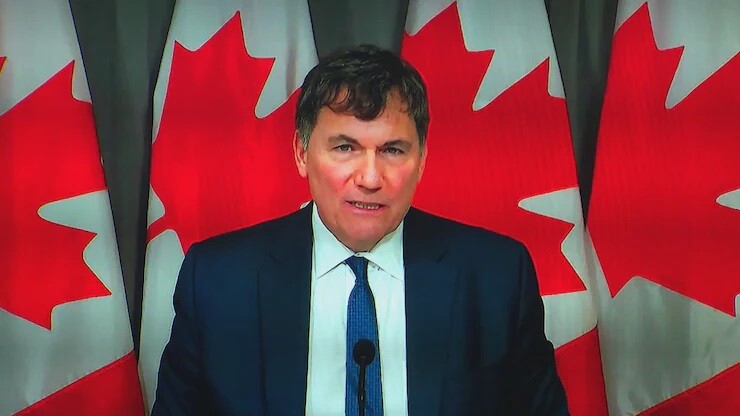
Canadian Minister responsible for trade relations with the United States, Dominic LeBlanc, said he expects Prime Minister Mark Carney and U.S. President Donald Trump to speak “in the coming days.”
His statement came yesterday during an interview on the program "Face the Nation", broadcast by the American television network CBS, at a time when the Trump administration is increasing pressure in trade negotiations with Canada.
LeBlanc told the program’s host, Margaret Brennan, that while Canada is “disappointed” by the new 35% tariffs imposed by Trump on imports from Canada, he continues to work toward reaching an agreement that he hopes will lift the trade restrictions between the two neighboring countries.
LeBlanc said that Canada is working to structure a deal that would allow Canadian and American suppliers to continue exchanging goods, while also protecting jobs on both sides of the border.
LeBlanc traveled to Washington last week in an effort to find common ground with the Trump administration ahead of August 1st—last Friday—the date when the new U.S. tariffs were set to take effect, aiming to secure a new agreement between Canada and its most important trading partner.
LeBlanc’s office said that the Canadian minister spoke with U.S. Secretary of Commerce Howard Lutnick on Thursday.
While the Trump administration granted Mexico a 90-day delay on the new tariffs, it imposed a 35% tariff on Canada for all goods that do not comply with the Canada–United States–Mexico Free Trade Agreement.
Michael Dubner, the National Leader for Economics and Policy at the Canadian branch of PricewaterhouseCoopers—a multinational professional services network—said on Friday that up to 90% of Canadian goods may be able to avoid the new U.S. tariffs thanks to their compliance with the mentioned free trade agreement.
Canada’s exports of steel and aluminum to the United States remain subject to a 50% tariff, as is now also the case for exports of semi-finished copper products. Meanwhile, automobile exports are subject to a 25% tariff.
Trump signed an executive order on Thursday evening, officially imposing increased tariffs on imports from Canada. An information sheet released by the White House justified the tariff hike by claiming that Canada had “failed to cooperate in curbing the continued flow of fentanyl” into the United States; it also cited Ottawa’s imposition of retaliatory tariffs against the U.S.
It is worth noting that statistics from U.S. authorities indicate that the amount of fentanyl seized at the border with Canada is extremely small.
In response to a question about whether he felt the negotiations with Washington were conducted in good faith, LeBlanc told Brennan: “The discussions were informative, constructive, and friendly.”
“We left, as always, with a better understanding of American concerns in the trade relationship,” LeBlanc continued, adding that Canada remains “very optimistic” about the possibility of reaching an agreement with the United States that will strengthen both economies.

