

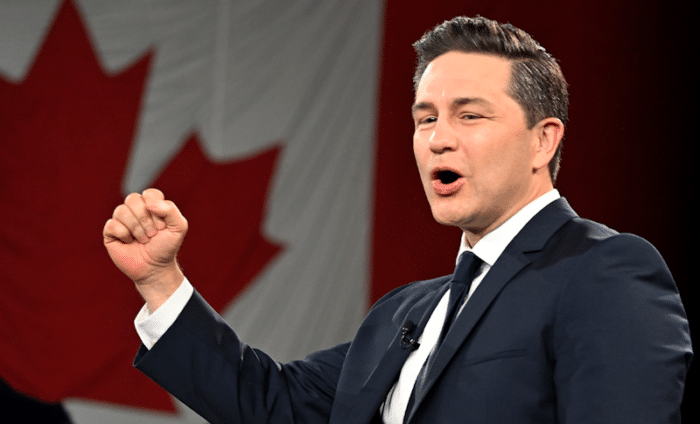
After 120 days of unexpected loss in his long-held Ottawa-area riding of Carleton, Conservative Party leader Pierre Poilievre has made a dramatic return to the House of Commons. On August 18, 2025, he won a closely watched by-election in Battle River–Crowfoot, a rural Alberta riding considered one of the party’s safest strongholds. His victory cleared the way for him to resume his role as leader of the Official Opposition and re-engage in the House of Commons as a member of parliament representing the people of Battle River-Crowfoot in Parliament.
In the by-election, Poilievre captured approximately 80.4% of the vote – a commanding win, though slightly less than the 82.8% secured by his predecessor, Damien Kurek, in the general election earlier in April. Kurek had stepped aside in June to allow Poilievre a path back into Parliament.
With his seat secured, Poilievre can now formally challenge Prime Minister Mark Carney within the House of Commons, rather than outside its walls as he had been doing since April. His return resumes his ability to hold the government to account and articulate Conservative policies directly to lawmakers.
What Does Poilievre’s Comeback Mean – and What’s His Next Move?
Reclaiming a Role, Not Reinventing It?
One practical outcome of Poilievre’s return is resuming full responsibilities as Opposition leader – but will his strategic approach change?
- There are questions about whether he will adopt a new direction or continue with the forceful, populist style that defined much of his political approach; a style praised by supporters for its clarity but viewed by some critics as polarizing.
The Leadership Review
A leadership review is scheduled for January. Poilievre’s performance in the by-election might improve his standing, but if support keeps declining, his previous campaign missteps could become vulnerable again.
Policy and Personality
Throughout the campaign and afterward, Poilievre emphasized core Conservative themes: defending gun rights, tough stance on crime, protecting Canadians from extortion, and challenging Liberal policies on immigration and the environment.
- Yet some commentators say the issue isn’t his policy stance, but his personal appeal. They argue that Poilievre continues to struggle with likability and that his messaging has not evolved in ways that might broaden his party’s appeal.
From Setback to Victory: What Changed?
Poilievre’s future was called into question when he lost his long-held riding of Carleton just a few months ago. He has now returned to Parliament with a resounding majority following his decisive victory in Battle River–Crowfoot, one of the safest Conservative seats in the nation. What has changed now that has inspired voters to support him? Did his message resonate deeper this time? Some of the possible contributing factors to his return were the riding’s strong Conservative base, a lower turnout for the by-election, and Poilievre’s persistent emphasis on issues like tough-on-crime policies, opposition to the carbon tax, and lower taxes.
Final Thought: A Second Chance, But Will the Script Change?
Pierre Poilievre’s return to Parliament marks a clear win for the Conservatives – but it also raises two key questions: Has he learned from the recent defeat in Carleton, and will that influence his leadership going forward? Will he offer a fresh tone or new strategies to reach Canadians who remain skeptical, or will he lean into the tried-and-true tactics that secured his comeback? As he takes his place back in the Commons, all eyes will be on whether this second act brings renewed energy – and whether that energy will translate into a broader path forward for his leadership and the Conservative Party.

